


18 August 2026
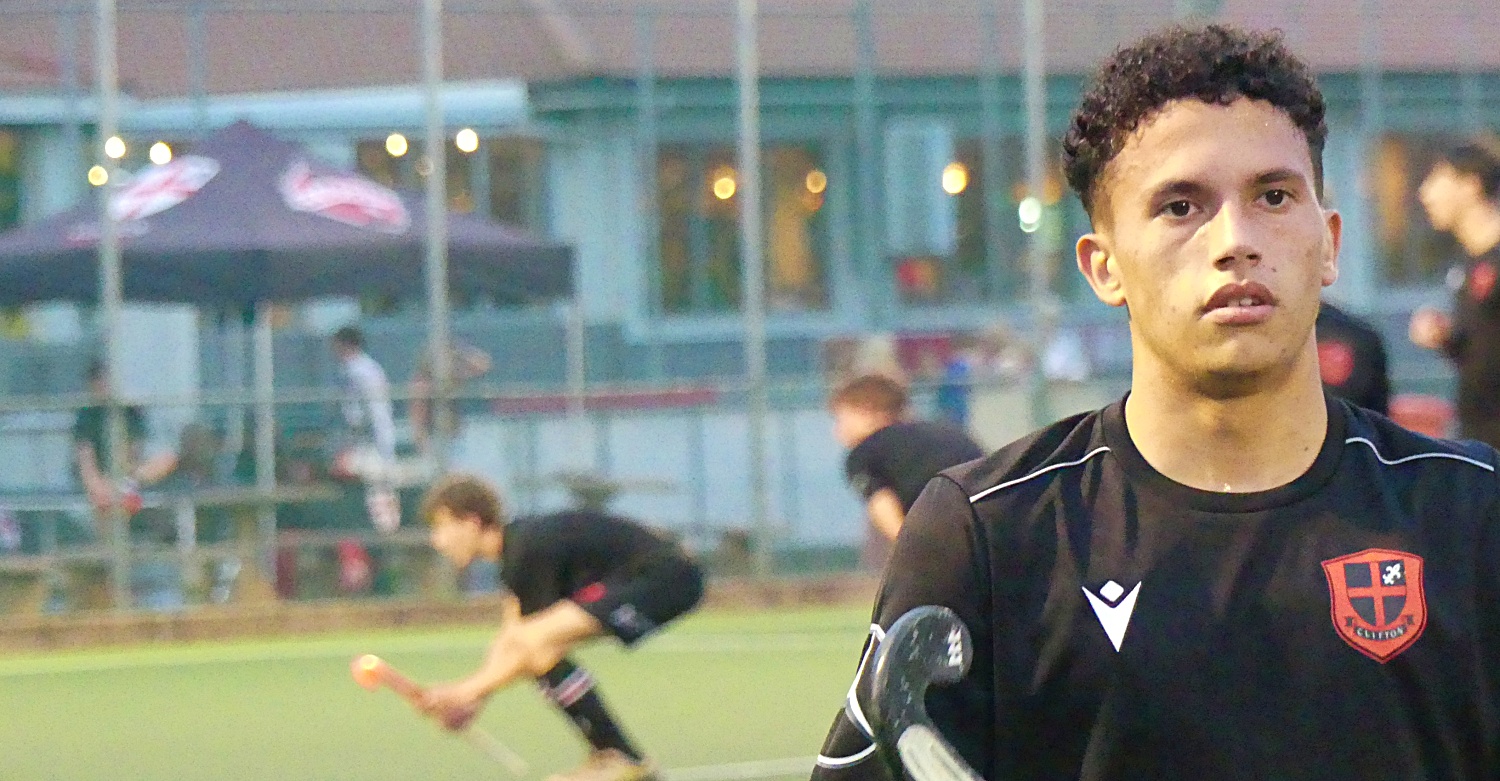
For five consecutive years, Western Province A had ruled the SASHOC National Week. On Saturday, 4 July, at St Anne’s College in Hilton, their reign ended in astonishing fashion.
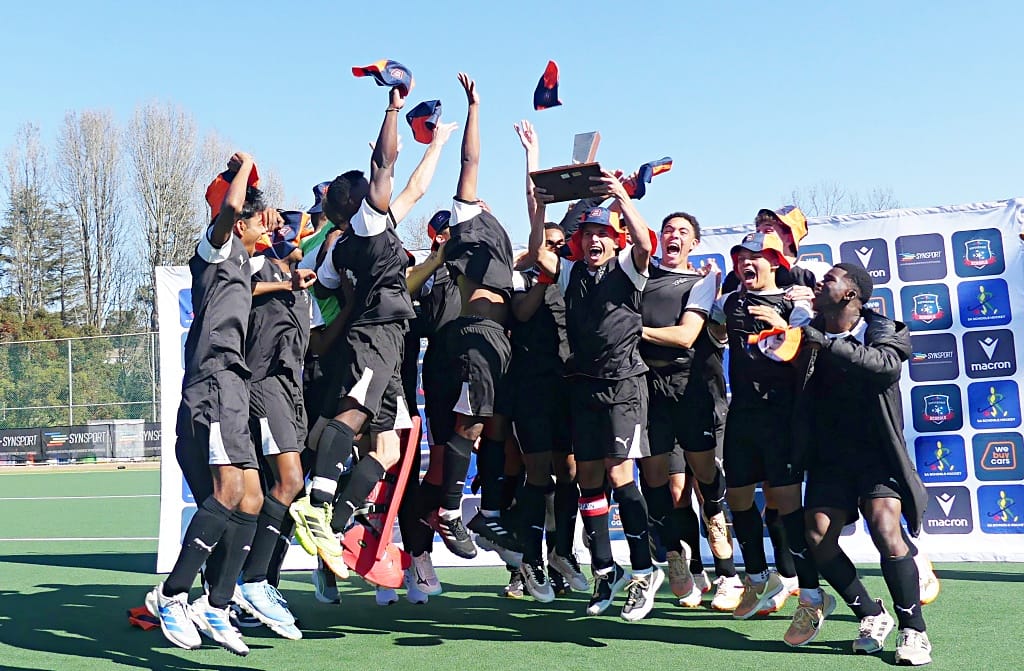
KwaZulu-Natal Coastal A, captained by Clifton College‘s Ryde Brisset, produced one of the greatest comebacks in the tournament’s history, recovering from 1-4 down early in the final chukka to draw 4-4 before claiming the title in a penalty shootout.
It was a victory built on belief, nerve, and resilience – qualities embodied by Brisset, whose own journey to lifting the trophy had been every bit as remarkable.
A final for the ages
The hosts struck almost immediately when Dan Holliday scored inside the opening minute, but Western Province responded like champions. Luc Dicey, Jacques van Dyk, and captain Mohloli Maseko, who scored twice, turned the contest on its head as Province surged into a commanding 4-1 lead with barely four minutes remaining.
The title looked settled. Then everything changed.
Jesse van Wyk gave Coastal hope. Moments later, Tyhill Naidoo beat Arin Spiller to make it 4-3.
Still, another goal seemed improbable. Yet Coastal refused to quit.
Then, Luc Boyall earned a penalty corner, and when Keegan de Jager‘s drag flick struck a defender on the line, the umpire awarded a penalty stroke. Tye Milne calmly converted to level matters at 4-4.
Western Province still had one last opportunity when they earned a late penalty corner. Even after Brisset broke early, leaving Coastal with only four defenders behind the line, the hosts survived.
A penalty shootout would decide the final. There, Brisset, with two of his closest friends – Milne and goalkeeper Georg Wolhuter – all from Clifton, took control. Dan Holliday, the scorer of the match’s first goal, was the other member of the four-player Clifton contingent in the side.
Milne converted both an eight-second penalty and a penalty stroke, Brisset found the backboard, and Wolhuter produced three outstanding saves to secure an unforgettable victory.
The celebrations that followed were justifiably as wild as the comeback itself.
Player of the Tournament
After Brisset lifted the trophy, he collected another honour – the SASHOC National Week Player of the Tournament award. That also made him an obvious choice for the South African Schools side.
The recognition carried even greater significance because he had missed the entire 2025 field hockey school season after undergoing shoulder surgery.
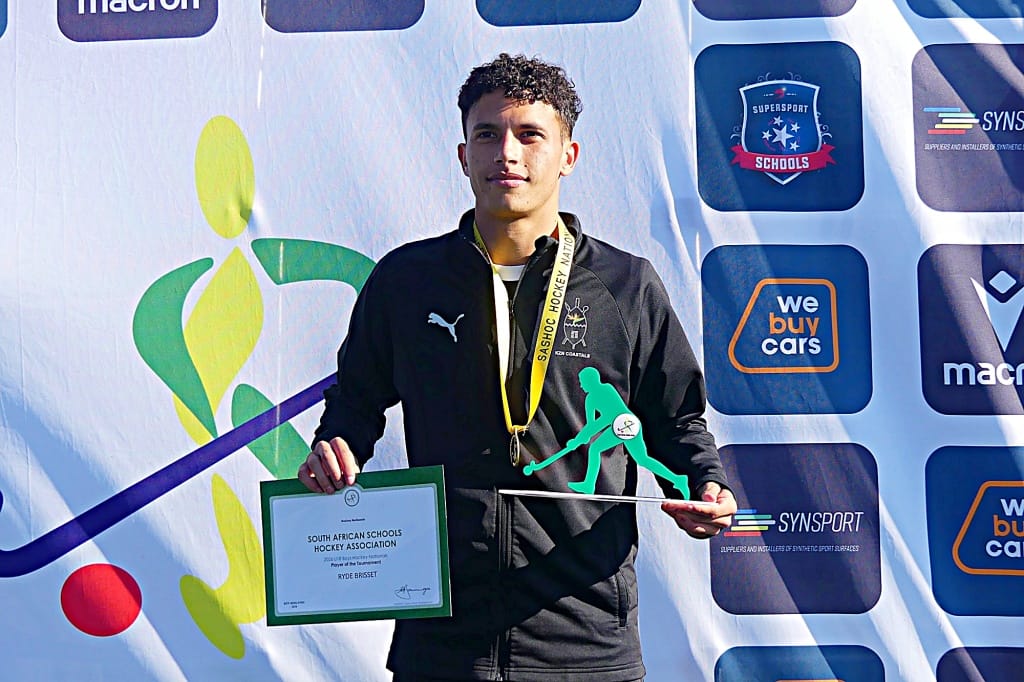
A year earlier, he had been one of South Africa’s brightest young prospects, representing the SA U17 side at the Dato Mirnawan Cup in Malaysia.
Then came the injury. Many players would have viewed a lost season as a major setback. Brisset chose a different path.
Finding another way to contribute
Following surgery, his rehabilitation was strict. “There was no training at all,” he recalled. “No running. The doctor said rest.”
Thankfully, he had his family and his friends at Clifton to lean on.
Unable to play, he found another role when Clifton first-team coach Calvin Price invited him to remain part of the squad.
“He wanted me involved because I’d played for South Africa and had learnt from national coaches,” Brisset explained.
Instead of carrying a stick, he carried a camera. He joined Clifton’s video analysis team, filmed Coastal Cup fixtures and school matches, and became an extra set of tactical eyes during review sessions.
“I’d comment on what I saw from the outside,” he explained
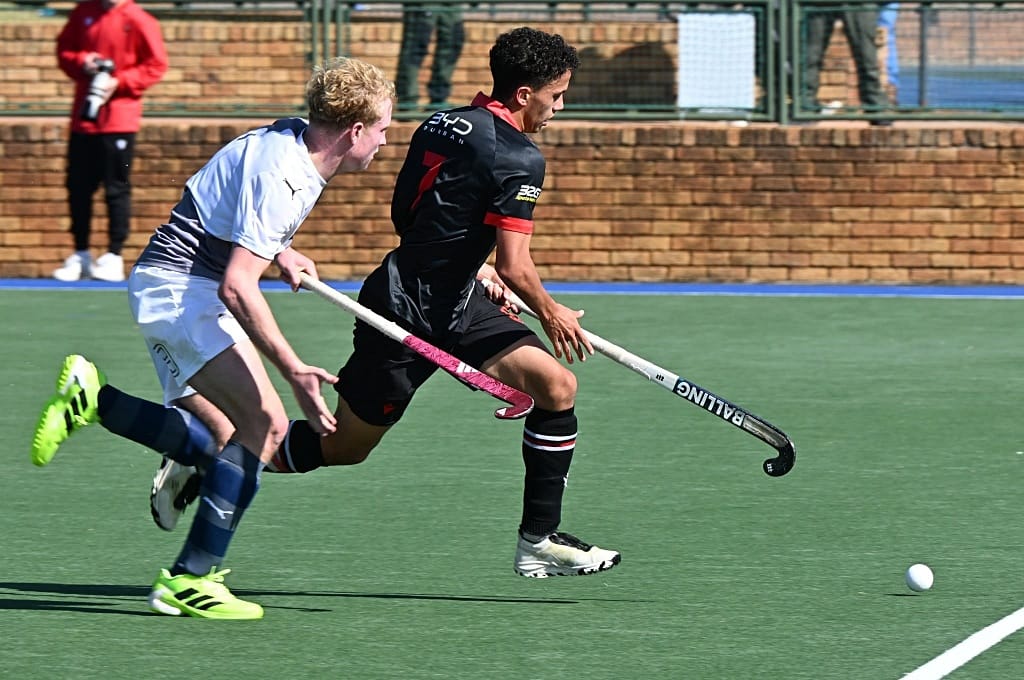
Ironically, watching rather than playing transformed his understanding of the game. “From the top [where the cameras are positioned], you can see where things are open,” he said. “It opened my eyes a lot. There’s a lot more space and more time on the ball than you realise.”
When he returned to action, that broader perspective strengthened his play
“I don’t think it was a lost season,” he said.
Rebuilding confidence
Six months after surgery, Brisset cautiously began training at the Riverside Sports Club. Wearing a shoulder brace and heavy strapping, he limited himself to basic ball work and running before gradually increasing his workload.
Eventually, he returned to competition through indoor hockey.
The physical recovery proved easier than the mental one. “Every time I misplayed a pass, I’d want to reach for the ball, but I’d hold back because I was scared my shoulder would go out again,” he revealed
He realised that fear would limit him unless he confronted it. “I said to myself, if this is how it’s going to be for the rest of the season, you’re not going to have a good season.”
Slowly, confidence replaced caution. Eventually, he stopped thinking about the shoulder.
Indoor success sparks the comeback
His first big breakthrough came with KZN Coastal’s U18A indoor side, whom he represented at the inaugural SASHOC U18 Indoor IPT, playing a key role as coach Sean Baker’s team captured gold.

“Making that team and winning gold was really something special,” Brisset said, underlining how important being part of the team’s culture meant to him.
More importantly, it reminded him – and everyone else – that he was capable of returning even stronger.
A captain with presence
Brisset’s leadership qualities have been evident for years. Price remembered first seeing him, Milne, and Wolhuter together as U11 players at a Pro Series Indoor (PSI) tournament. He still has the photograph.
“He glided with the ball,” Price recalled. “He was a natural ball player and goal scorer.”
When Brisset debuted for Clifton’s first team in Grade 10 under former coach Keegan Pearce, he wasn’t sheltered. He was placed in central midfield against opponents up to three years older.
“You’d never think he was a Grade 10 boy playing against U18 players,” Price said. “He looked like an U18 player.”
When Price later became Clifton’s Director of Hockey, he inherited one of the country’s brightest young talents.
“Being part of Ryde’s career from then until now has been very special,” he said
Why the selectors chose him
KZN Coastal’s selectors faced an enviable dilemma when choosing their captain for the SASHOC National Week.
Their squad included the captains of Clifton, Durban High School (DHS), Northwood, Westville Boys’ High, and Kearsney College. They chose Brisset.
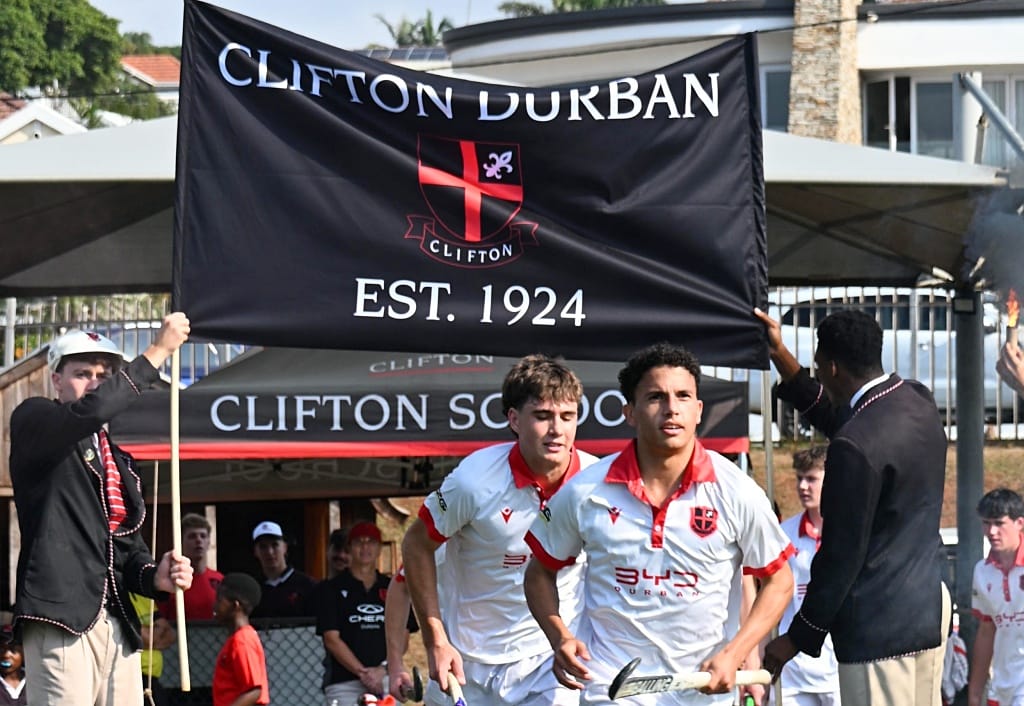
Each of the skippers offered a different style of leadership, but Brisset’s was the one in which the selectors placed their trust, and it paid dividends.
“He’s not your out-there player, screaming at his players,” Price explained. “He leads by example.” That quiet authority and the presence he carries on the field proved invaluable throughout the tournament.
Reflecting on KZN Coastal’s title-winning run, the Clifton coach said: “He got us out of trouble a lot. If you look at the goals he scored, especially against Western Province in the must-win pool match, it shows his leadership.”
The right school, the right environment
Brisset’s talent attracted plenty of interest while he attended Chelsea Preparatory School. Yet, when it came to selecting a high school, Clifton College ultimately became the obvious choice.
The school offered an outstanding hockey programme, strong academics, and the opportunity to remain a day scholar. It proved an ideal fit.
Throughout his development, he benefited from exceptional coaching at Clifton, firstly under Keegan Pearce, then under Price, who also coaches South Africa’s national women’s indoor side.
Price admitted that players like Brisset influenced his own decision to join Clifton. “That made my choice to come here so much easier,” he said. “It gave me a sense of direction.”
Completing the comeback
By the time SASHOC National Week arrived, Brisset had completed one of the finest comeback stories in school hockey.
A player who had spent months unable to run captained KZN Coastal to their greatest victory.
A player who had feared reaching for loose balls now thrived under the tournament’s biggest pressure moments.
A player who had missed an entire field hockey season became South Africa’s Player of the Tournament.
His performances reached their highest level as the stakes increased, none more so than during Coastal’s unforgettable triumphs over Western Province.
The trophy reflected an extraordinary team effort. Brisset’s story reflected something more.
It was proof that resilience, patience, and quiet leadership can sometimes produce the loudest victories of all.